

This 11 Plus guide explains everything parents need to know about 11 Plus preparation. Whether your child is starting in Year 4 or preparing for the exam in Year 5, the right approach can make a big difference. This guide covers when to start, how to build a revision plan, what resources to use and practical ways to support your child throughout their 11 Plus preparation.

What Is the 11 Plus and What Does It Test?
The 11 Plus is an entrance exam used by many grammar schools and some independent schools in England. Most children take it at the start of Year 6. The exam tests key skills in English, Maths, verbal reasoning and non-verbal reasoning. Some schools may also include Creative Writing, Latin or, more rarely, Accountancy.
Purpose – We aim to spot those learners packed with star-quality smarts.
Subjects Tested – English, Maths, Verbal Reasoning and Non-Verbal Reasoning. Some schools may also include Creative Writing, Latin or, more rarely, Accountancy in their entrance assessments.
Format – The bulk of the test has choices to pick from, and they’re checked with a machine that can see your marks.
When to Start Preparing for the 11 Plus
Getting a head start is key to doing well. The top scores come from a steady, long-term method that builds strong basics in main topics and how-to-do-things-right skills.
11 Plus Preparation Timeline
Year 3 – Let’s work on fundamental skills in basic math and English. Stir up a passion for gaining knowledge and being inquisitive.
Year 4 – Begin light 11 Plus preparation by introducing reasoning questions, expanding vocabulary and becoming familiar with the exam format.
Year 5 – Boost your studies using detailed material, mock tests, and ways to get faster and more precise.
How to Prepare for the 11 Plus
Preparing for the 11 Plus takes time and a clear plan. Simple steps can help your child build key skills and feel more confident. With steady practice, they can feel ready when exam day arrives.
Create a Preparation Timetable
A simple study timetable gives your child a clear routine. Keep each session short and spread the work across the week. This can make revision easier, reduce stress and help each session feel more focused.
Use High-Quality Resources
Choose trusted study guides from publishers such as CGP and Atom Learning. Use a mix of books, online tasks and simple learning tools. This can keep your child engaged and help them build a wider range of skills.
Once your child understands the basics, introduce 11 Plus exam papers.
that match the format used by their target schools. Regular practice helps children become familiar with question styles, improve time management and identify areas that need more attention.
As the exam gets closer, 11 Plus mock exams.
give children valuable experience under realistic exam conditions. They also build confidence and highlight any final areas for improvement before the real test.
At-Home Practice
Practicing at home can help strengthen what your kid has learned during tutoring hours. Together with your child, make achievable goals that are realistic, while keeping an eye on how they progress. Moreover, it helps keep the interest alive.
Regular study times indeed play a significant role, but don’t just stick to books! Make sure there’s space for fun activities and resting time as well, we all need balance in our lives!
Subjects Covered During 11 Plus Preparation
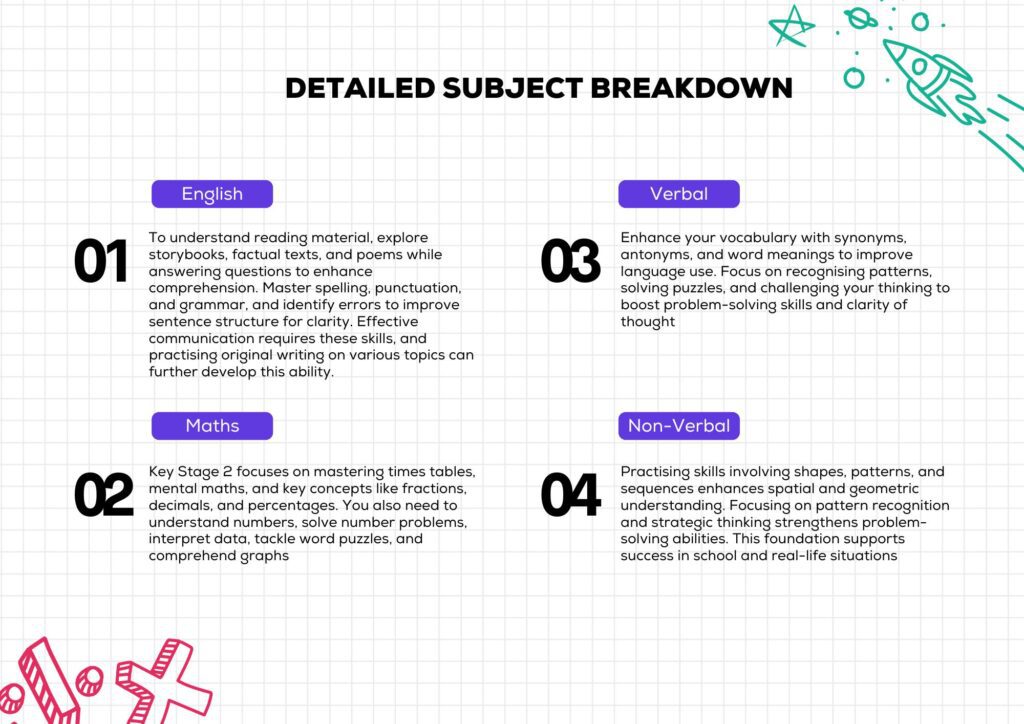
English
Reading stories, non-fiction and poems helps children build key English skills. Ask your child questions about each text to improve their understanding and vocabulary. Spelling, punctuation and grammar also matter because they help children express ideas clearly.
Some schools may also include a Creative Writing task. Regular writing practice with different prompts helps children organise their ideas, expand their vocabulary and write with greater confidence. Our collection of 11 Plus Creative Writing Prompts can help your child build these skills before exam day.
If your child finds comprehension, vocabulary or writing particularly difficult, an English 11 Plus tutor can provide targeted support alongside regular home practice.
Maths
Maths covers key Stage 2 skills. Your child should know their times tables and feel confident with mental maths. They also need to understand fractions, decimals and percentages.
Regular practice with word problems, graphs and data can build speed and accuracy. If your child finds multi-step questions hard, an 11 Plus Maths tutor can explain each step and help them build confidence.
Verbal Reasoning
Verbal Reasoning tests vocabulary, logic and problem-solving. Children can improve by reading often, learning new words and practising common question types.
Some schools use the CEM format. It places more focus on vocabulary and reasoning. Before choosing revision materials, read our guide to CEM 11 exams so you know what your child may face.
Regular practice helps, but some children need extra support. A specialist 11+ Verbal Reasoning tutor can explain tricky question types and help your child build confidence.
Non-Verbal Reasoning
Non-Verbal Reasoning helps children develop visual thinking, pattern recognition and logical problem-solving. Regular practice with shapes, sequences and diagrams helps pupils recognise common question types more quickly and improves their confidence under timed conditions.
Many children find this part of the exam unfamiliar because schools do not usually teach it directly. If your child finds these questions difficult, working with an 11+ Non-Verbal Reasoning tutor can help them learn effective strategies and build confidence before exam day.
Latin
Most 11 Plus exams do not include Latin. However, some independent schools assess it as part of their own entrance process. If your child’s target school requires Latin, it is important to include it in your 11 Plus preparation from the beginning rather than treating it as an afterthought.
Start by checking the school’s admissions requirements. Then focus on building basic vocabulary, grammar and translation skills through regular practice. If your child needs extra support, an 11+ Latin tutor can provide targeted preparation for school-specific entrance assessments.
Accountancy
Accountancy is not part of the standard 11 Plus exam. However, a few specialist schools may include simple business or money topics in their own tests. Always check the school’s admissions details before adding it to your child’s 11 Plus preparation.
If Accountancy is required, short and focused practice can help your child learn the main topics. An 11+ Accountancy tutor can give clear support for these school-specific tests.
When to Apply for the 11 Plus Exams
Sign-ups for the 11 Plus usually open during Year 5, although the exact dates vary between schools and local authorities. It is important to check the registration process early so your child does not miss the application window.
Before beginning the final stage of 11 Plus preparation, read our guide on when to apply for the 11 Plus exam to understand the key dates, registration process and what parents need to do before the exam.
Tips for Success
- Set Clear Goals – Join hands with your kid to shape dreams that are both within grasp and possible to realize.
- Maintain a Balanced Routine – Make sure there’s room for learning, unwinding, and merriment.
- Stay Positive – Help and cheer your kid on every step of the way as they get ready.

Conclusion
Getting your child ready for the 11 Plus starts with early planning and a clear revision plan. Regular practice, good resources and steady support help children build confidence over time. Some pupils may also need extra help with the hardest 11 Plus subjects, especially if they struggle with Maths, English or reasoning. Start early, focus on steady progress and celebrate small improvements along the way.
If your child needs more personalised support, 11 plus tutoring online can provide targeted help across English, Maths, Verbal Reasoning and Non-Verbal Reasoning. One-to-one lessons can focus on weaker areas, build exam technique and help your child prepare at a pace that suits them.
FAQs
What should a complete 11 Plus guide include?
A complete 11 Plus guide should explain the exam format, subjects, registration process and preparation timeline. It should also cover practice papers, revision plans and ways parents can support their child at home.
When should my child start 11 Plus preparation?
Many families begin light 11 Plus preparation in Year 4. More focused study often starts in Year 5. However, the best time depends on your child’s level, target schools and confidence.
How can I use this 11 Plus guide at home?
Use this 11 Plus guide to build a simple weekly routine. Include reading, Maths, verbal reasoning and non-verbal reasoning. Then review mistakes and adjust the plan as your child improves.
What is the best way to begin 11 Plus preparation?
Start with your child’s core English and Maths skills. Then introduce reasoning questions and short practice tasks. Good 11 Plus preparation should build slowly and avoid too much pressure.
How much 11 Plus preparation should my child do each week?
There is no fixed amount. Short, regular sessions often work better than long study blocks. A good 11 Plus guide should help parents create a routine that fits around school, rest and family life.