

Deciding whether GCSE Maths is too difficult often sparks lively debate among students, parents, and educators. While some find the curriculum challenging, others see it as a necessary foundation for developing critical thinking and problem-solving skills. The course covers a wide range of topics, from algebra to geometry, each designed to test students’ understanding and application of mathematical concepts. However, with the right support and resources, many students can overcome these challenges and achieve success. This article will explore the complexities of GCSE Maths and offer insights into how students can excel.

Why is GCSE Maths Considered Hard?
Complex Curriculum Content
The study program for GCSE Maths is broad and includes areas like figurine manipulation, algebra, shape measurements, geometry, data science, statistics to the velocity of objects in motion calculus. Every subject area introduces new ideas that students apply in different settings, which can seem like a huge wave for some.
Problem-Solving Skills
The math tests you take in secondary school usually want to see if you can solve problems and think through new ideas. They’ll ask you to figure things out for yourself instead of just remembering what your teacher said. Some might find this tough, especially students who prefer learning by heart and repeating information they hear or read without understanding it deeply.
Exam Pressure
Feeling the need to do great in tests can make GCSE Maths even harder. Having a timer for exams and remembering many different formulas and ways can cause these tests to be very nerve-wracking.
Varied Student Abilities
Kids come from all sorts of schooling backgrounds. Because of this, their skills in math can be pretty different. This difference means that some kids might find the same lessons harder than others.
Strategies to Make GCSE Maths More Manageable
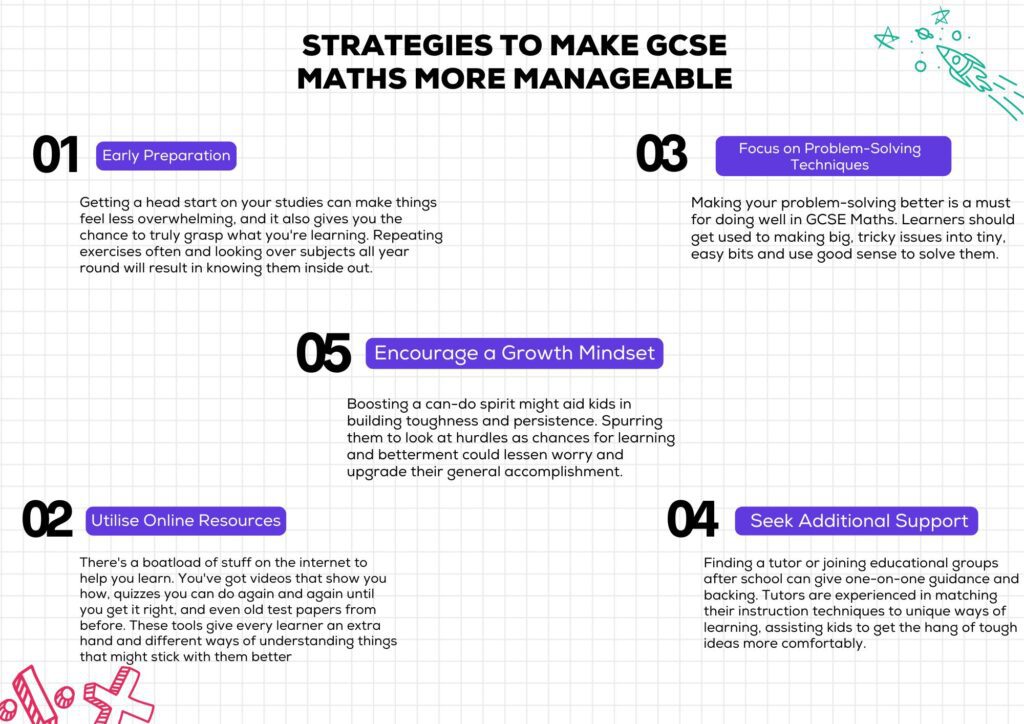
Early Preparation
Getting a head start on your studies can make things feel less overwhelming, and it also gives you the chance to truly grasp what you’re learning. Repeating exercises often and looking over subjects all year round will result in knowing them inside out.
Utilise Online Resources
There’s a boatload of stuff on the internet to help you learn. You’ve got videos that show you how, quizzes you can do again and again until you get it right, and even old test papers from before. These tools give every learner an extra hand and different ways of understanding things that might stick with them better
Focus on Problem-Solving Techniques
Firstly, making your problem-solving better is a must for doing well in GCSE Maths. Learners should get used to making big, tricky issues into tiny, easy bits and use good sense to solve them.
Seek Additional Support
Finding extra support can make difficult topics feel much more manageable. Experienced Maths tutors can provide one-to-one guidance, adapt explanations to different learning styles and help students build confidence with weaker areas.
Encourage a Growth Mindset
Lastly, boosting a can-do spirit might aid kids in building toughness and persistence. Spurring them to look at hurdles as chances for learning and betterment could lessen worry and upgrade their general accomplishment.

Conclusion
GCSE Maths can feel difficult because it combines a broad range of topics with problem-solving, time pressure and the need to apply methods accurately. However, with consistent revision, regular practice and the right support, students can make the subject far more manageable.
It helps to identify weaker topics early, practise exam-style questions and review mistakes carefully instead of simply repeating the same exercises. Building confidence with core skills such as algebra, geometry and number work can also make more advanced questions easier to tackle.
If your child still struggles with certain topics or exam technique, experienced GCSE Maths tutors can provide personalised explanations, targeted practice and support that matches their pace and learning needs.
FAQs
Is GCSE Maths Really Hard?
GCSE Maths can feel difficult because students need to understand a wide range of topics and apply them accurately under exam conditions. However, regular practice, strong core skills and careful review of mistakes can make the subject much more manageable.
What Are the Hardest Topics in GCSE Maths?
The hardest topics vary by student, but algebra, trigonometry, geometry, probability and multi-step problem-solving often cause difficulty. The best approach is to identify weaker areas early and practise them regularly using exam-style questions.
How Can I Make GCSE Maths Easier?
Start by breaking difficult topics into smaller steps and practising one skill at a time. Use worked examples, past papers and mark schemes to understand how questions are solved. Reviewing mistakes is especially important because it helps you spot patterns in where you lose marks.
How Much Revision Should I Do for GCSE Maths?
Short, regular revision sessions are usually more effective than long sessions just before the exam. Focus on weaker topics first, then gradually increase your use of timed past papers. Consistent practice helps improve both confidence and speed.
Can I Pass GCSE Maths If I Am Struggling?
Yes. Struggling with GCSE Maths does not mean you cannot pass. Start by strengthening basic skills, focus on the topics that cause the most difficulty and practise regularly. If progress is still slow, GCSE Maths tutors can provide targeted support and explain difficult concepts in different ways.
11 Plus Exam Papers – General Discovery