
- What Is Visual Learning and How Does It Work?
- What Are the Main Types of Visual Learning?
- Benefits of Visual Learning
- Are Visual, Auditory and Kinaesthetic Learning Styles Real?
- What Are the Best Visual Learning Strategies for Students?
- How Can Children Use Visual Learning at School?
- What Are Effective Visual Learning Strategies for University Students?
- How Do You Create Effective Visual Learning Materials?
- Which Digital Tools Support Visual Learning?
- What Are the Best Mind-Mapping Apps for a Tablet?
- How Can Online Tutoring Support Visual Learning?
- Conclusion
Many students learn better when they can see an idea. A clear chart, map or diagram can make a hard topic easier to follow.
Visual learning uses tools like these to support study. It can help students sort facts, spot links and follow each step. However, it is not only for people who call themselves visual learners.
This guide explains how visual learning works and when it can help. It also covers useful methods, digital tools and ways to use visuals at school, university and home.
What Is Visual Learning and How Does It Work?
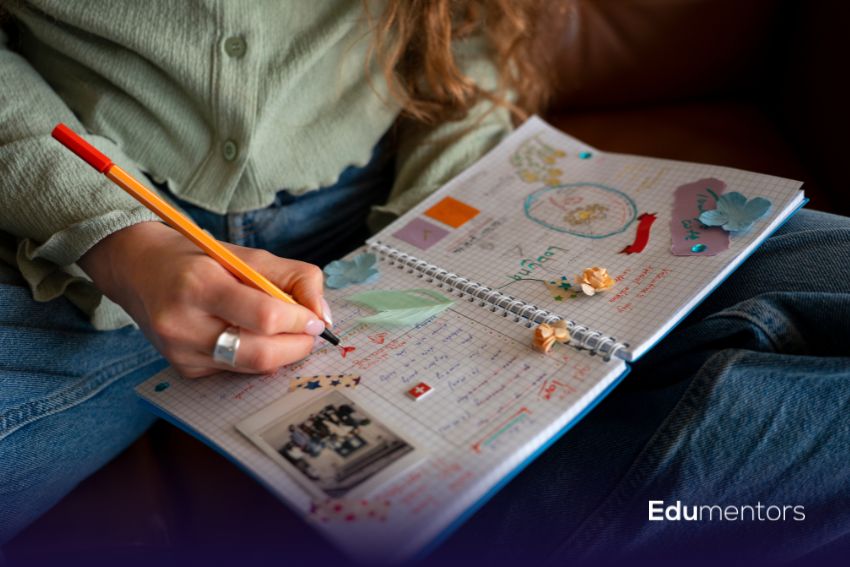
Visual learning uses images to make ideas easier to understand. These may include diagrams, charts, maps and colour-coded notes. As a result, students can sort information and see clear links.
However, visual learning is not a fixed learning style. A student may find diagrams useful without needing every topic taught in the same way.
Visuals work best when they have a clear purpose. For example, a heart diagram can show blood flow while a timeline can place events in order. By contrast, too many colours or pictures may distract from the main point.
What Are the Main Types of Visual Learning?
Visual learning can support almost every school subject. However, the best method depends on the topic. A diagram may work well for Biology. By contrast, a table may suit English Literature.
Common examples include:
- mind maps linking a main topic to key ideas
- timelines placing events in date order
- labelled diagrams showing structures or systems
- flowcharts explaining each stage of a process
- graphs and charts showing data
- maps showing places, movement or physical features
- colour-coded notes sorting themes or groups
- illustrated flashcards pairing words with images
- tables comparing characters, theories or formulas
- marked exam questions showing key command words
Visual methods are also central to creative subjects. Art students may use mood boards, sketches and visual references to develop their work. Support from Top Online Art and Design Tutors can help students plan ideas, review their choices and explain how their work develops.
Students can also make visual summaries from memory. For example, they can close the textbook and draw a process without using their notes. Afterwards, they can compare both versions and add any missing points.
This method is more active than copying a finished diagram. It asks students to recall facts and arrange them clearly. As a result, they can test both their memory and their understanding.
Benefits of Visual Learning
Visual learning works best when the image suits the topic. A clear visual can make ideas easier to grasp. It can also help students see links between facts.
Visual aids can make hard topics feel less complex. For example, a reaction diagram can show each step in Chemistry. In English Literature, a family tree can show how characters are linked.
Other benefits may include:
- making patterns and relationships easier to notice
- helping students organise large topics
- supporting explanations of abstract ideas
- providing a clear overview before detailed study
- making comparisons easier to review
- offering another way to retrieve information
Still, visual tools should support learning. They should not replace active thought. A polished poster will not help much if a student only reads it again and again. Instead, students should test themselves, redraw key ideas and explain each visual in their own words.
Are Visual, Auditory and Kinaesthetic Learning Styles Real?
Visual, auditory and kinaesthetic learning styles are common ideas. However, there is little proof that each person has one fixed type. The best method often depends on the task. Maps may help with visual topics. Pronunciation needs listening. Practical skills often need hands-on work.
The Education Endowment Foundation also warns against fixed labels. You can read more in its guidance on learning styles.
This idea is one of several popular claims about education that deserve closer examination. Our guide to 10 Common Learning Myths – Debunked explores why matching every lesson to one preferred style is not a proven route to better results.
Several models still offer useful language for discussing how information is presented. However, they should not become strict labels. Our article on the Top 4 Learning Style Models – Debates Surrounding Them explains the main theories and their limitations.
What Are the Best Visual Learning Strategies for Students?
The best visual methods make students use what they know. They should not just look at the page. First, students choose the key points. Next, they place them in a clear order. Then, they test what they can recall.
One simple method is to turn notes into a diagram. Start with the main idea. Add the key points around it. Then, show how each point links. Later, try to draw the same diagram from memory.
Students can also try these methods:
- Build a mind map from memory. Place the main topic in the centre. Then, add key branches without checking your notes. Afterwards, use a textbook to correct mistakes and fill any gaps.
- Create a process diagram. Turn a sequence into clear stages. This works well for scientific cycles, Maths methods and essay plans.
- Use comparison tables. Place two or more ideas side by side. For example, students can compare characters, themes, theories or historical periods.In English Literature, visual tables can help students organise quotes, themes and character links. Support from Top English Literature Tutors can also help students turn these notes into clear written analysis.
- Annotate worked examples. Add short notes to explain why each step is needed. This can be especially useful in Maths and Science.
- Combine images with short explanations. Add enough text to explain each diagram. Without clear labels, the visual may be hard to use later.
Colour can also help when it marks a clear group. For example, students may use one colour for evidence and another for analysis. However, too many colours can make the page harder to follow.

How Can Children Use Visual Learning at School?
Children can use simple visual tools at school and at home. Younger pupils may use picture plans, number lines and story maps. Older pupils can make diagrams, timelines and revision grids.
Parents do not need costly resources. Paper and a few pens are often enough. For example, a child could draw the water cycle. They could also place the main events of a story into separate boxes.
Useful visual methods for children include:
- picture cards for new words
- number lines for addition and subtraction
- storyboards for reading tasks
- labelled diagrams for Science
- maps for Geography
- timelines for History
- colour-coded sentence plans
- visual homework checklists
These methods can also help in creative and practical subjects. For example, older pupils may use sketches, plans and labelled models in Design & Technology. Support from Top Rated Design & Technology Tutors can help students develop these ideas and explain their choices clearly.
Parents should also ask children to explain what they have made. This can show whether they understand the topic or have only copied an image.
What Are Effective Visual Learning Strategies for University Students?
University students can use visual tools to sort complex information. For example, concept maps can link key ideas and researchers. Comparison grids can show where theories agree or differ. Meanwhile, flowcharts and timelines can make long topics easier to review.
A one-page summary after each topic may include:
- the main argument
- key terms
- supporting evidence
- links to other topics
- important researchers
- possible exam questions
These methods can be especially useful in Psychology. Students may need to compare studies, theories and research methods. Support from Top-Rated Psychology Tutors can help them organise complex topics and turn them into clear revision notes.
However, students should not spend hours on the design. The page should be quick to update and easy to use. Its main aim is to support learning rather than look perfect.
How Do You Create Effective Visual Learning Materials?
Good visual materials have one clear aim. They should make ideas easier to understand. So, keep each page simple and focused.
First, decide what the learner needs to know. Then, build the visual around that point. Use clear headings, arrows and space. Also, make sure each link is easy to follow.
A strong visual resource often includes:
- a clear title
- short and readable labels
- a logical order
- consistent symbols
- limited and purposeful colour
- enough space between sections
- accurate links between ideas
- brief supporting explanations
Do not add pictures just to fill a blank space. Extra details can hide the main point. So, simple visuals often work best.
Students should also check the material on its own. It should make sense without the textbook. If it does not, add a clear label or a short note.
Which Digital Tools Support Visual Learning?
Digital tools can help students create clear visual notes. For example, Canva offers templates for mind maps and diagrams. Meanwhile, Miro provides a larger space for shared planning.
Other useful tools include Quizlet for flashcards and Desmos for graphs. Students can also use Microsoft OneNote to organise notes across devices.
The best choice depends on the subject and task. Free plans may be enough, but students should check current features before paying.
What Are the Best Mind-Mapping Apps for a Tablet?
The best mind-mapping app depends on the student’s needs. MindMeister works well for online maps and shared editing. Canva suits students who want ready-made layouts. By contrast, Miro offers more space for notes, diagrams and project plans.
Before choosing an app, compare:
- ease of use
- stylus or handwriting support
- available templates
- offline access
- sharing features
- export formats
- free-plan limits
A simple app that opens quickly may be better for daily revision than a complex tool with many unused features.
How Can Online Tutoring Support Visual Learning?
Online tutors can use live diagrams, marked questions and shared whiteboards to explain ideas step by step. This can work well in Maths and Science, but it can also help in essay subjects. For example, tutors may use timelines, theme maps and planning grids to organise key points.
Edumentors tutors choose visual tools when they suit the topic. They can also change the method if the first explanation is not clear. As a result, lessons can combine diagrams, questions, discussion and practice.
Jonas T. teaches History, English and Geography. These subjects often involve complex ideas, long texts and links between events. He can use timelines, maps, planning grids and clear examples to make each topic easier to follow.

Jonas T.
English | History | Geography Tutor
Student at UNIVERSITY OF OXFORD
£26 Per session
Book Free TrialSome students understand a difficult topic more clearly when they can see each stage explained live. Meet Jonas T. for online one-to-one lessons that use visual tools alongside clear teaching and guided practice.

Conclusion
Visual learning uses maps, charts and diagrams to support study. These tools can help students sort ideas and see clear links. However, each visual should have a clear aim. It should also support active practice.
Students do not need to call themselves visual learners. In fact, the best method often depends on the topic. A mix of visuals, recall and practice can work well.
An online tutor can help a student choose the right study method. During one-to-one lessons, the tutor can use diagrams, marked examples and live feedback. As a result, the student can build a clearer understanding.
You Might Be Interested In
The 7 Benefits of Learning Online You Didn’t Know
The Ultimate Guide to Language Learning
FAQs
What is visual learning?
Visual learning uses images, maps, charts and diagrams. These tools can make ideas easier to understand. They can also help students see patterns, links and steps more clearly.
What is a visual learner?
A visual learner is commonly described as someone who prefers to see information. However, students should not be limited by this label because research does not prove that people learn best through one fixed style.
What are examples of visual learning?
Examples include mind maps, timelines, graphs, flowcharts, diagrams, illustrated flashcards and colour-coded notes. The best choice depends on the subject and the information being studied.
What are the benefits of visual learning?
Visual learning can help organise information, show connections and explain complex processes. It is most effective when the visual directly supports the topic.
What is the difference between visual, auditory and kinaesthetic learning?
Visual learning uses images and diagrams while auditory learning focuses on spoken information. Kinaesthetic learning involves action or physical practice. These terms describe methods and preferences rather than fixed abilities.

How to Pass English Language GCSE – Your Detailed Guide