
Many students believe GCSE Art is about talent. That belief causes more lost marks than any weak drawing. In reality GCSE Art rewards thinking. It rewards development and it rewards decision-making over time.
The GCSE Art portfolio is not about filling pages quickly and it is not about creating one impressive final piece. Instead it shows how ideas grow from start to finish. Examiners look closely at the whole journey and not just the outcome. Because of this students who understand the process often outperform students who rely on skill alone.
This guide explains exactly what to include in a GCSE Art portfolio and how it is marked. It focuses on what examiners actually reward and not on myths or guesswork. Most importantly it helps students and parents focus effort on work that earns marks and avoid work that does not.
What Is a GCSE Art Portfolio?
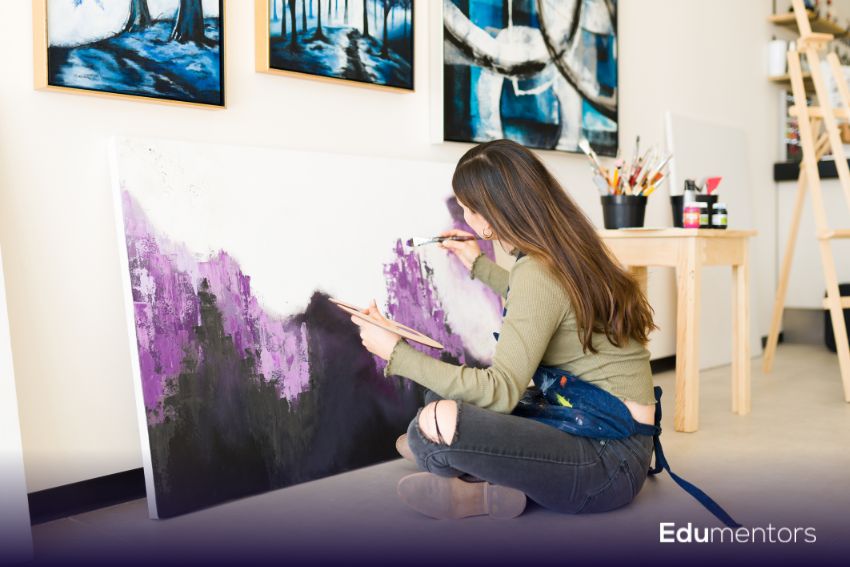
A GCSE Art portfolio is a set of coursework you build across the course. You create it over many months. It includes sketchbook pages, research experiments, planning and one or more final pieces.
However, it is not a scrapbook. Examiners do not reward decoration, lots of pages, or neatness on its own. Instead, they reward clear thinking. Each page should have a reason and each task should move your project forward.
Put simply, the portfolio answers one question. How did the student get from the first idea to the final outcome? When that journey is clear, marks are easier to give. When it feels rushed or unclear, grades often drop even if some pieces look strong.
How GCSE Art Portfolios Are Marked
GCSE Art does not rely on memorisation or written exams. Instead, examiners assess the portfolio against clear marking criteria called Assessment Objectives. These criteria apply across all exam boards, although the wording may vary slightly.
Marks do not come from one strong drawing. They come from consistency over time. A student who shows steady improvement usually scores higher than a student who produces occasional strong work with little explanation.
From a parent’s point of view, this means effort across the year matters more than last-minute work. Students who delay development often struggle to recover marks later.
The Four Assessment Objectives in GCSE Art Coursework
GCSE Art is marked using four clear Assessment Objectives. Together they make up the full grade and each one focuses on a different part of the creative process. The key point to understand is simple. Examiners do not look for perfection. They look for progress. Once these four areas are understood, the portfolio becomes far easier to plan and review.
Developing Ideas and Research in the GCSE Art Sketchbook
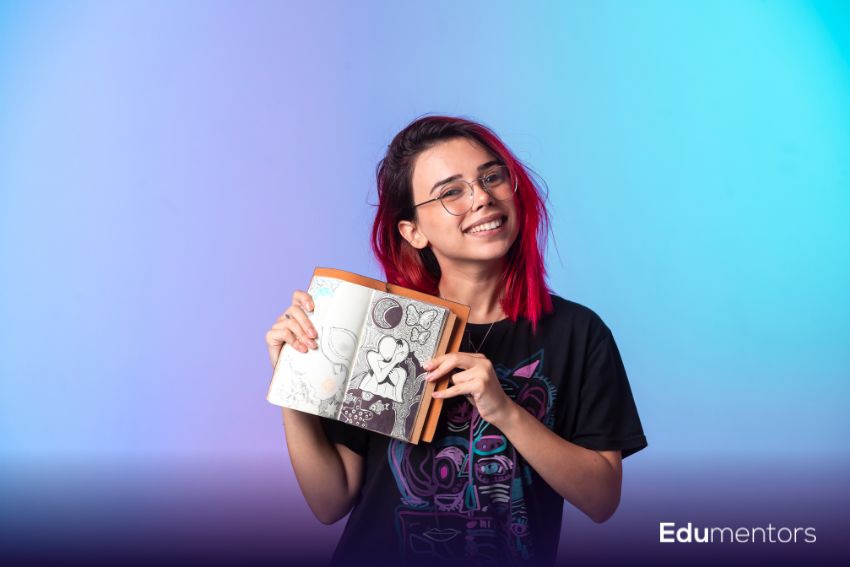
This objective focuses on ideas and research. Examiners want to see how a student begins a project and how that idea develops over time.
Students usually start with a theme question or a brief. From there, they research artists’ images and other sources that link clearly to the idea. However, research must lead somewhere. Pages that sit alone with no influence on later work rarely earn high marks.
Strong portfolios show ideas evolving. Initial thoughts often change as students discover new influences or test new approaches. That change is a strength and not a weakness. It shows learning in action.
Short explanations help here. When students explain what they discovered and how it affected their choices, examiners can follow the thinking more easily.
Experimenting With Materials and Techniques in GCSE Art Coursework
Experimentation shows learning in action. Students test materials, tools, processes and then review the results.
Importantly, not every experiment needs to succeed. In fact, explaining why something did not work often earns marks. It shows reflection and problem-solving.
What matters most is evidence of trial and improvement. For example, a student might test different media compositions or colour schemes. They then choose what works best and explain why.
This process shows control and intention. It also proves the final outcome did not appear suddenly.
Recording Ideas and Observations in the GCSE Art Portfolio
This part of the portfolio focuses on observation. It shows how students record the world around them and gather original material.
Students might draw objects from life or take their own photographs. They may also record smaller details such as texture, shape or light. These studies do not need to look perfect. Instead, they should show careful looking and honest effort.
This work supports later development. Because students record real sources, their ideas become stronger and more personal. As a result, later pages feel more focused.
Short notes are useful here. When a student explains what they noticed or why they chose a subject, the examiner understands the intention. This makes marks easier to award.
Producing a Personal Final Outcome for the GCSE Art Portfolio
The final outcome is the most finished piece in the portfolio. Still, it should not feel sudden or separate.
Instead, it should grow from the pages before it. It should show the research experiments and planning that shaped it. When those links are clear, the examiner can follow the full journey.
Most importantly, the final outcome should feel personal. It should show the student’s own ideas and not just copied techniques. Personal does not mean strange or dramatic. It means the choices make sense and feel deliberate. When the final outcome links clearly to the development, it is easier to award higher marks.
The Ideal GCSE Art Portfolio Structure
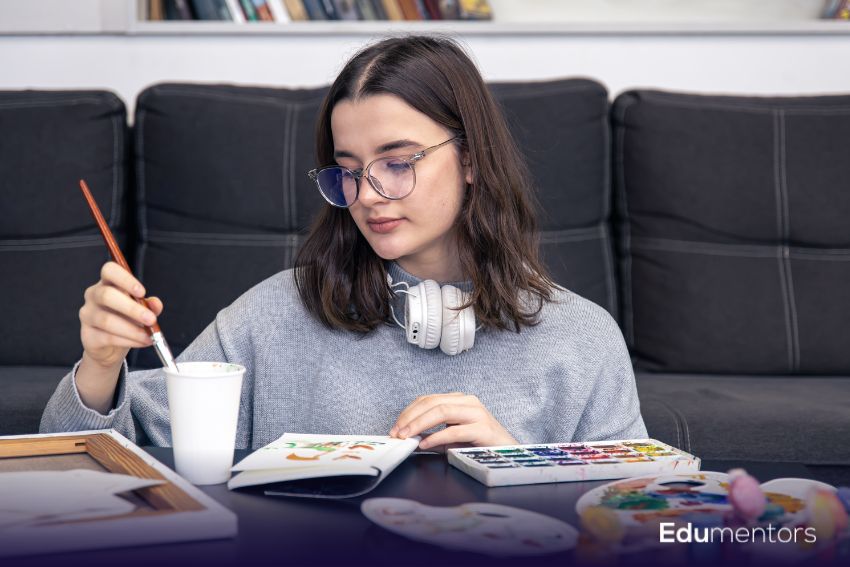
A strong GCSE Art portfolio follows a clear and logical structure. This helps examiners understand the work without effort.
In most cases, the structure works best when it moves step by step. It begins with a starting idea. It then moves through research and experimentation. Finally, it ends with planning a resolved outcome and reflection.
Because each section supports the next, the portfolio feels organised and purposeful. This also helps students avoid random pages that do not earn marks. Structure does not limit creativity. Instead, it gives creativity direction.
What to Include in a GCSE Art Portfolio?
A GCSE Art portfolio should include both practical work and explanation. This balance helps examiners see what the student did and why.
A strong portfolio usually includes:
- artist research that influences later work
- observational studies from real sources
- experiments with materials and techniques
- development pages that show improvement
- planning work for the final outcome
- a final piece that links clearly to earlier work
Above all, every page should have a reason for being there. If a page repeats the same idea, it rarely adds value. Because of this, fewer strong pages often score higher than many weak ones.
Artist Research That Earns Marks in GCSE Art Coursework
Artist research often causes confusion. Many students write long facts because it feels safe. Unfortunately, this approach does not earn high marks.
Instead, research should focus on useful ideas. Students should analyse how an artist uses colour, line, shape, texture or materials. They should then test those ideas in their own work.
Short explanations work best. Clear links between research and practise make a big difference. When examiners can see learning applied, marks increase.
Observational Drawing in the GCSE Art Sketchbook
Observation plays an important role in GCSE Art. It shows how well a student looks at real subjects and records what they see.
This might include drawing objects, sketching hands or photographing local scenes. These studies help build skill and confidence. They also provide strong starting points for later development.
Observation does not need to look perfect. It needs to show effort, focus and progress. Honest studies usually score better than copied images.
Experimentation and Development in a GCSE Art Coursework Portfolio
Experimentation is one of the clearest ways to earn marks. It shows growth and decision-making.
Students should try different materials, tools and approaches. They may also test layouts or compositions. After each test, they should explain the result.
A short note can explain what worked, what did not and what comes next. This clarity allows examiners to follow the learning step by step. Even failed experiments can support high marks when explained well.
Planning and Creating the Final Outcome in GCSE Art
Planning helps students create stronger final work. It also shows intention, which examiners value highly.
Planning pages might include sketches, colour tests, or material trials. These pages explain choices before the final work begins.
The final outcome should then reflect these decisions. When earlier planning is visible, the portfolio feels complete and carefully considered.
GCSE Art Annotation Explained
The annotation explains the work. It shows decision-making and reflection. Good annotation stays short and clear. It explains what the student did and why. It also explains changes and learning. A simple structure works well:
- What I tried
- Why I chose it
- What worked or did not work
- What I will do next
Annotation is most effective when added during the process. If all writing appears at the end, development becomes harder to see.
What a Grade 9 GCSE Art Portfolio Does Differently
Grade 9 portfolios feel calm and controlled. Each page links clearly to the next so the journey is easy to follow. These students refine ideas instead of restarting. They improve one direction step by step. They also select their strongest work carefully. Most importantly, top portfolios show confidence. Choices feel deliberate and not rushed.
Common GCSE Art Portfolio Mistakes
Some mistakes reduce marks quietly. However, most are easy to fix. Common issues include repeated research, weak experimentation and poor links between pages. Another problem is rushed final work with little planning. Regular review helps prevent these mistakes. Small changes made early can protect valuable marks later.
GCSE Art Portfolio Checklist
Before submission, it helps to pause and review the portfolio as a whole. This final check often highlights gaps. Ask these questions:
- Does the portfolio show clear progress from start to finish
- Do pages explain decisions and learning
- Does the final outcome connect to earlier work
If the answers are yes, the portfolio is usually in a strong position.
At this stage, it can also help to compare the work with an external checklist. The BBC GCSE Art and Design – Coursework Checklist is a useful reference point when reviewing progress or preparing for final submission.
Many schools also provide learner checklists. For example, Becket School offers a GCSE Art personal learner checklist that links coursework elements to assessment expectations.
Conclusion
A strong GCSE Art portfolio is built over time and not at the last minute. It rewards consistency, reflection and clear decision-making. Most importantly, it shows how a student learns and not just what they can produce.
For parents, the key role is support rather than pressure. Encourage steady progress. Ask simple questions about choices and next steps. Focus on development and not perfection. When the portfolio is clear, structured and well-explained, marks usually follow. With the right guidance, GCSE Art becomes manageable and far less stressful.
If you want additional support, you can read our blog and get help from an excellent online tutor with GCSE Art at every stage of the portfolio.
FAQs
How many pages should a GCSE Art portfolio have?
There is no fixed number. Examiners focus on quality and progress and not page count. A shorter portfolio can score highly if it shows clear development.
What should be included in a GCSE Art portfolio?
A strong portfolio includes research, observational work, experimentation, planning and a final outcome. It should also include short annotation that explains choices and improvement.
Is the GCSE Art portfolio the same as the sketchbook?
Not always. Many students use a sketchbook as the main place for portfolio work. However, portfolios can include sketchbook pages, larger sheets and final pieces.
Can a student improve their GCSE Art portfolio late in the course?
Yes. Students should improve existing work first. Stronger links, clearer annotation and better refinement usually help more than starting again.

GCSE Physics Topics 2026 – Physics Revision